

1. Caldas da Rainha
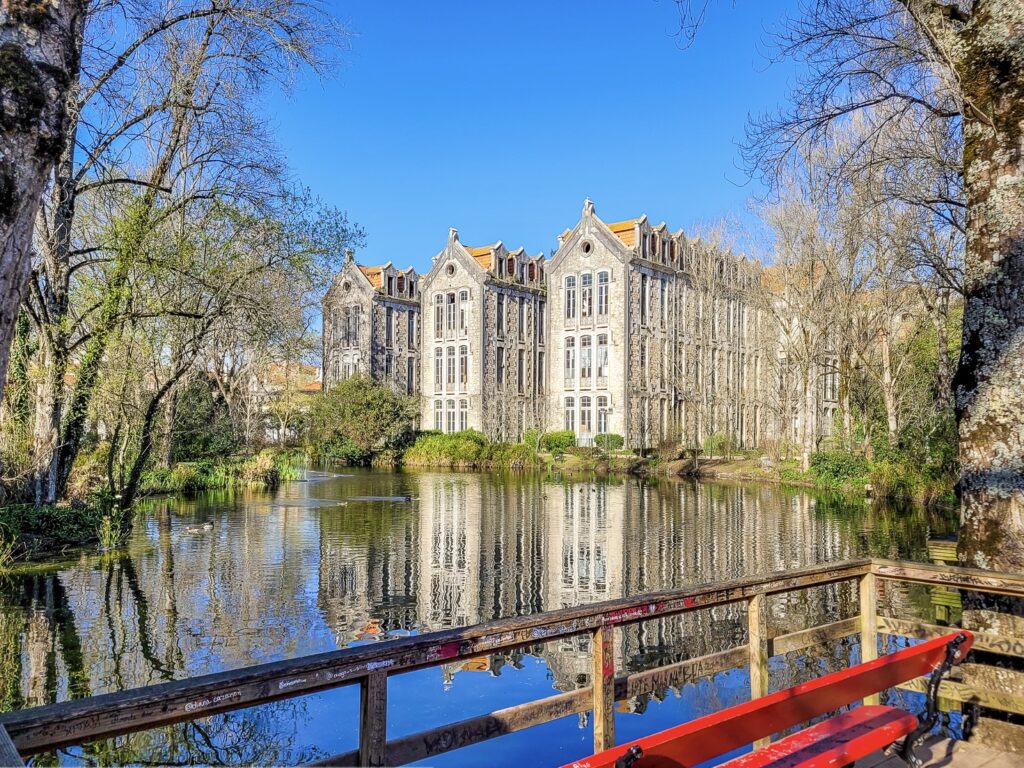
The name translates to “Queen’s Hot Springs.” In the late 15th century, Queen Leonor reportedly stopped here, saw locals bathing in the natural thermal waters, and decided to build a hospital on the spot. That hospital is still there, as are the thermal baths. The town has always had a slightly unconventional streak, and it still does.
Today, Caldas is an artsy, slightly eccentric town about an hour north of Lisbon, in the heart of the Silver Coast. Cafés full of locals, excellent healthcare, and every service you’d realistically need, yet within 15 to 20 minutes you’re at Foz do Arelho, São Martinho do Porto, or the medieval streets of Óbidos.
Caldas is also Portugal’s ceramics capital. The Bordallo Pinheiro factory has been producing those distinctive cabbage-leaf plates and ornamental pieces here since 1884. There’s a contemporary arts centre, an art and design school, and independent galleries that wouldn’t feel out of place in Lisbon. The Praça da Fruta, a daily open-air fruit and vegetable market right in the centre of town, has been running since the 1500s. You can do your weekly shop there for almost nothing compared to other Western countries.
What really makes Caldas work for expats is the location. São Martinho do Porto in particular has a near-enclosed, shell-shaped bay that’s genuinely stunning and almost absurdly calm compared to the Atlantic swells further up the coast. It’s perfect if you have young kids, or if you just want to swim somewhere without being constantly thrown around by waves.
Property prices are still well below the national average. The town itself has a population of around 30,000, and just over 50,000 in the broader municipality. There’s a hospital, supermarkets, pharmacies, and everything you’d need day to day. It’s not glamorous and it’s not trying to be. That’s exactly why people end up staying.
Best for: People who want authentic Portuguese life without feeling isolated.
2. Setubal
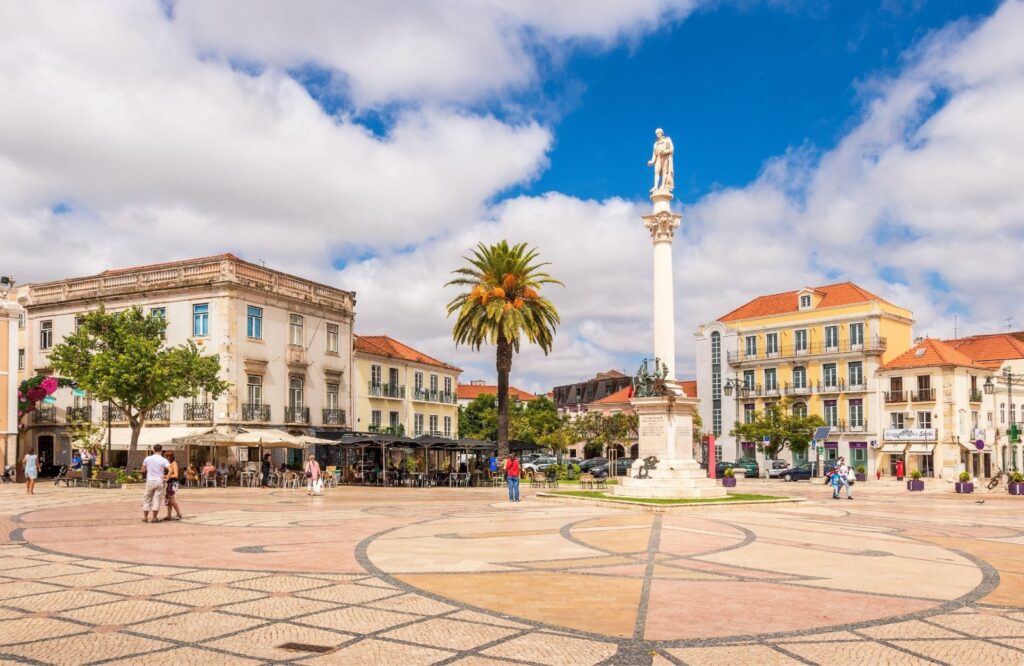
Cross the bridge south out of Lisbon and within 40 minutes you’re in Setúbal. Its fishing boats land their catch before sunrise, and by mid-morning it’s on your plate. A national park on its doorstep, dolphins in its estuary, and property prices that would make anyone on the Cascais line cry. It’s no wonder more expats are quietly choosing the south side of the river.
With a population of around 120,000, Setúbal is a real, working city. This isn’t a polished tourist destination. There’s a grittiness to it that puts some people off, and that’s fine. But for the expats who land here, that’s exactly the point. It feels like Portugal, not like a version of Portugal designed for foreigners.
The seafood scene is remarkable. Setúbal is one of the biggest fishing ports in the country, and the choco frito (fried cuttlefish) here is legendary. It’s the dish the city is known for. The Mercado do Livramento, the main indoor market, regularly shows up in “best markets in Portugal” lists, and once you’ve been, you’ll understand why. The fish comes off the boats and goes straight onto the stalls. On a Saturday morning, the whole place is packed with locals.
The Moscatel de Setúbal wine region surrounds the city, and then there’s the Arrábida Natural Park, which stretches along the coast to the west and includes some of the most beautiful beaches in the country. Praia de Galapinhos and Praia de Figueirinha have crystal-clear water, backed by limestone cliffs, and barely a building in sight. Both are around a 15-minute drive from the city centre.
The Sado Estuary is home to a resident pod of bottlenose dolphins. The Tróia Peninsula is a short ferry ride away, and can be accessed by foot or by car. Continue another 20 minutes south and you’ll reach Comporta, a stretch of coast that’s been drawing celebrities and serious money in recent years. Stunning, but increasingly expensive… perfect for a day trip!
Transport links are solid. The A2 motorway gets you into Lisbon in about 40 minutes, or the train will get you there in under an hour. There are public schools, a highly regarded international school, shopping centres, and all the infrastructure of a functioning city. Setúbal just doesn’t market itself the way the Algarve or Lisbon does, and most people who live here are perfectly happy about that.
Best for: Families who want authenticity, convenience, and property prices that still make sense.
3. Aveiro
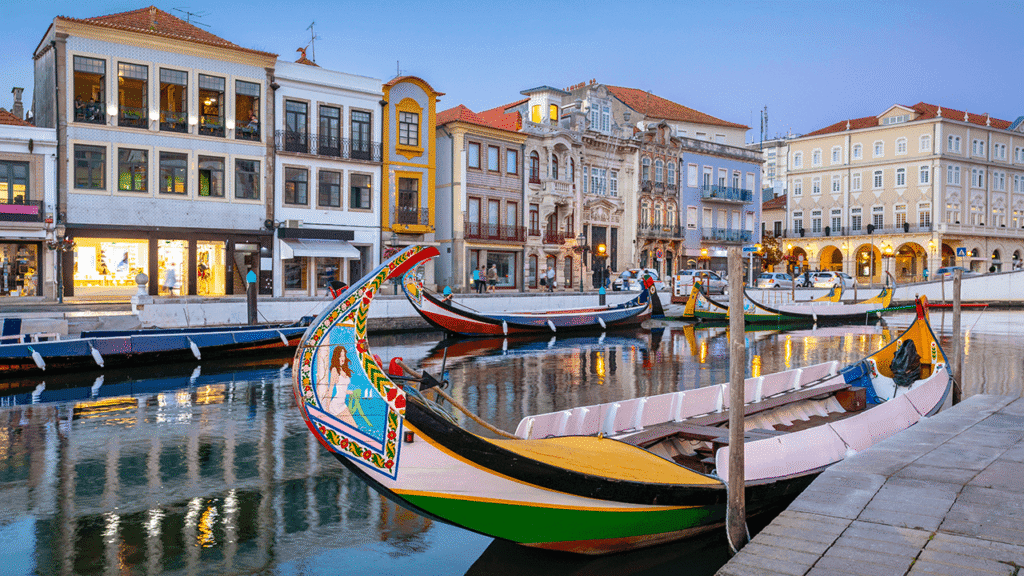
You’ll see Aveiro described as “the Venice of Portugal” in almost every article written about it. It’s not a terrible comparison. There are canals, there are colourful boats, and there’s water running through the centre of the city. But calling it “Venice” undersells what actually makes Aveiro interesting.
It’s a university city of around 80,000 people, and the University of Aveiro has one of the strongest engineering and tech faculties in the country. That matters because it means Aveiro has a younger demographic than most Portuguese cities outside Lisbon and Porto, and it has a tech and startup scene that’s been growing steadily. For anyone on a D8 visa working remotely, that kind of environment can make a real difference to day-to-day life and networking opportunities.
The Ria de Aveiro, the huge lagoon system that runs through and around the city, stretching 45km, is genuinely spectacular. You can kayak, paddleboard, birdwatch, cycle along the banks, or just sit by the water and eat ovos moles (a local sugar and egg yolk pastry that Aveiro takes extremely seriously).
Costa Nova, about 10 minutes from the city centre, has those iconic candy-striped beach houses that show up on every Portuguese tourism poster. The beach itself is also stunning. Barra, just next to it, has the tallest lighthouse in Portugal, and the fourth tallest in Europe.
What most people don’t realise about Aveiro is how well connected it is. It’s around an hour from Porto by car or by train, and roughly two and a half hours from Lisbon. The A1 and A25 motorways intersect nearby, so you’ve got good road access in every direction.
The cost of living is noticeably lower than Porto, and considerably lower than Lisbon. You’re getting a city with genuine character, proper infrastructure, and a lifestyle built around water, without paying city prices for it. There’s a growing expat presence here, but it’s still early. You won’t find as many English menus or expat Facebook groups running the social scene. That’s a good sign – depending on what you’re after.
Best for: Anyone who wants a Portuguese city that feels young, affordable, and genuinely different.
4. Viana do Costelo
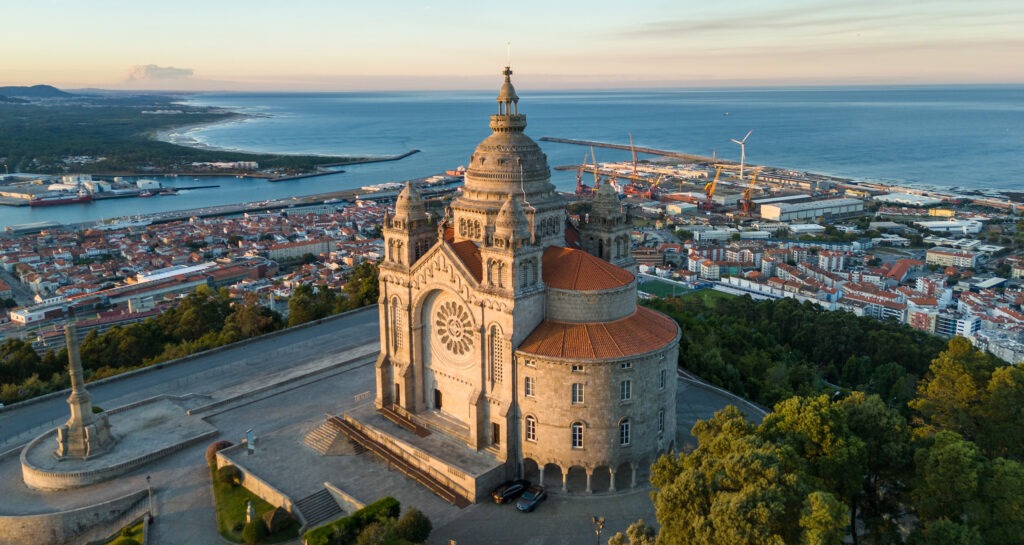
Viana do Castelo sits at the mouth of the Lima river in Portugal’s Minho region, about 45 minutes north of Porto. The landscape is dramatically different to what most people picture when they think of Portugal. Dense green hillsides, terraced vineyards, river valleys, and Atlantic mist rolling in off the coast
The town itself has a population of around 38,000 and a compact, walkable historic centre full of charming, cobbled streets, independent cafés, and squares that feel like they haven’t changed in decades. The Santa Luzia basilica, sitting on the hilltop above town, has one of the most photographed viewpoints in the country. The view over the river, the coastline, and the surrounding hills is extraordinary.
The beaches here deserve more attention than they get. Praia do Cabedelo, just across the river from the town centre, is a long, wide stretch of golden sand that catches excellent wind and surf. The sunsets along this part of the Atlantic coast are some of the best in Portugal. Dramatic, unhurried, and on most evenings you’ll have the beach almost to yourself.
The Minho region is the home of Vinho Verde (green wine), and it’s everywhere here. It’s a young, light wine specific to Portugal, with a subtle natural fizz, typically costing a couple of euros for a bottle.
The Romaria da Nossa Senhora d’Agonia, held every August, is one of the biggest and most traditional festivals in Portugal. Three days of processions, folk costumes, fireworks, live music, and the town swelling to several times its normal population. It’s one of those things you have to see to fully appreciate.
For day-to-day practicality: there’s a hospital, good schools, a polytechnic, plenty of supermarkets, and reliable road and rail links. Porto airport is about 45 minutes by car, or an hour by train. Property prices are considerably lower than Porto, and you’re living in a part of Portugal that most expats haven’t even considered.
The honest trade-off? It rains more here than anywhere else on this list. Minho is the wettest region in Portugal. If that’s a dealbreaker, it’s not for you. But the people who end up here tend to love it precisely because it’s so different to what everyone else expects from Portugal.
Best for: Expats who care more about landscape and lifestyle than year-round sunshine.
5. Carcavelos / Parede / São João do Estoril
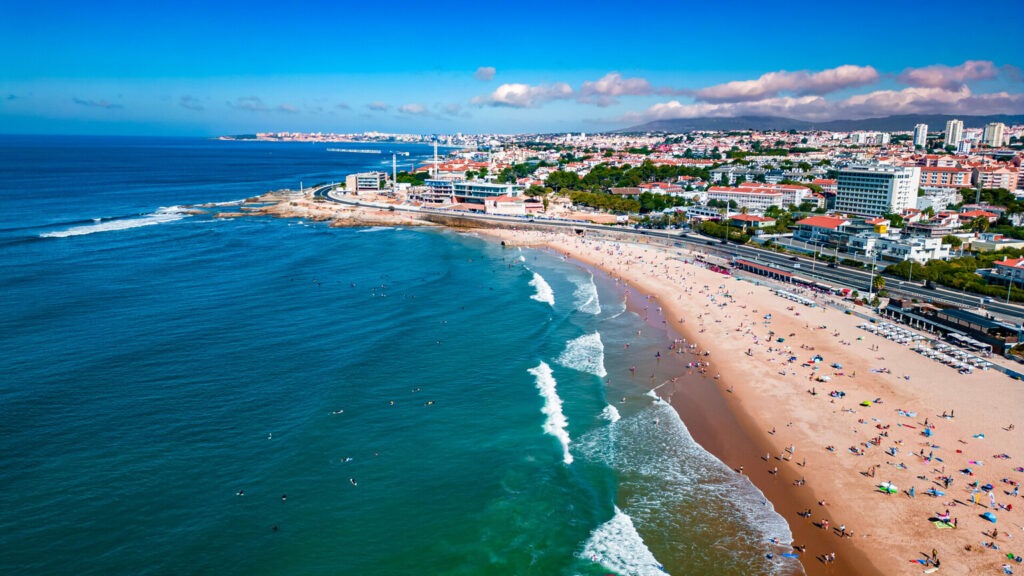
Most people considering Portugal know about Cascais and Estoril, and their ever-increasing property prices. But there’s a string of smaller towns between Lisbon and Cascais, sitting on the same train line, with the same coastline, the same quality of life… and meaningfully lower prices. Carcavelos, Parede, and São João do Estoril are three of them.
Carcavelos has the biggest beach on the entire Linha de Cascais. It’s a wide, sandy stretch that gets packed with surfers and locals on summer weekends but stays relatively quiet the rest of the year. There’s an abundance of trendy cafés, co-working options, and restaurants. But it’s still a real town, not a resort.
Parede is smaller and quieter, with a proper village feel. It has its own beach (Praia da Parede) and all the other everyday essentials, including a weekly market. The pace of life feels a step removed from the Cascais buzz. People who live here tend to know their neighbours, walk to the bakery in the morning, and take the dog along the seafront path. It’s that kind of place.
São João do Estoril sits between Estoril and Parede, and has a more residential, low-key feel than either. It has its own beach, a handful of good local restaurants, and a quiet seafront promenade. It’s the kind of town where not much happens, and that’s entirely the point. For families especially, that calm is a selling point, not a drawback.
The real selling point for all three is the Cascais train line. You’re minutes from Cascais in one direction, or 25 to 30 minutes from Cais do Sodré in central Lisbon in the other. The train runs roughly every 20 minutes and costs a couple of euros. You can live by the coast and work in Lisbon without a car. That’s a combination most expats don’t realise exists until they get here.
Rent and property prices along this stretch are noticeably cheaper than Cascais, though they’ve been creeping up. A two-bedroom apartment in Carcavelos will still run you significantly less than the equivalent in Cascais or Estoril, and you’re only a few stops further up the line.
This is probably the “hiding in plain sight” entry on this list. People land in Cascais, assume that’s the only option on the Linha, and never look at what’s sitting just up the road.
Best for: Families wanting more for their money than Cascais and Estoril, and looking for a less touristic buzz and more of a neighbourhood feel.
6. Leira
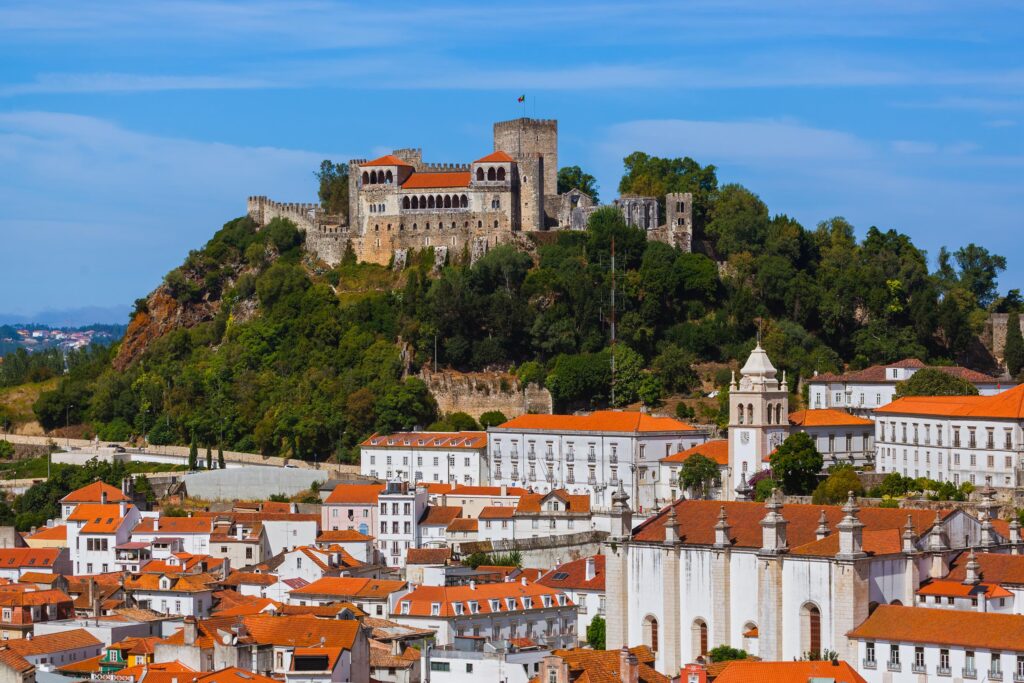
Leiria might be the most overlooked city in Portugal.
It’s a city of around 50,000 people in the centre of the country, sitting roughly halfway between Lisbon and Porto, with a medieval castle on a hilltop, a river running through the centre, and a low cost of living. The old town has a genuine charm to it. Tree-lined squares, good independent coffee spots, and a relaxed energy that comes from having a large student population without the tourist footfall.
Part of the reason Leiria doesn’t have an obvious headline is that it’s not a beach town, though the coast is only about 20 minutes away (Nazaré, São Pedro de Moel, and Vieira de Leiria are all within easy reach). It’s not a big cultural destination, though it has a decent restaurant scene, a regular programme of festivals and markets, and enough going on that you won’t be bored. It’s not on the standard tourist route, which means it doesn’t get much exposure outside of Portugal.
It has the infrastructure of a regional city – good hospitals, schools, shopping, restaurants, and employment – without the congestion or housing costs of Lisbon or Porto. The A1 motorway puts you into Lisbon in about 90 minutes and Porto in about the same.
For the right person, Leiria is an incredibly smart move. You get a proper city with proper infrastructure, a young population, easy access to the coast and to both major cities, and property prices that are still very reasonable.
Best for: Families and professionals who want affordable convenience rather than a holiday atmosphere.
7. Peniche
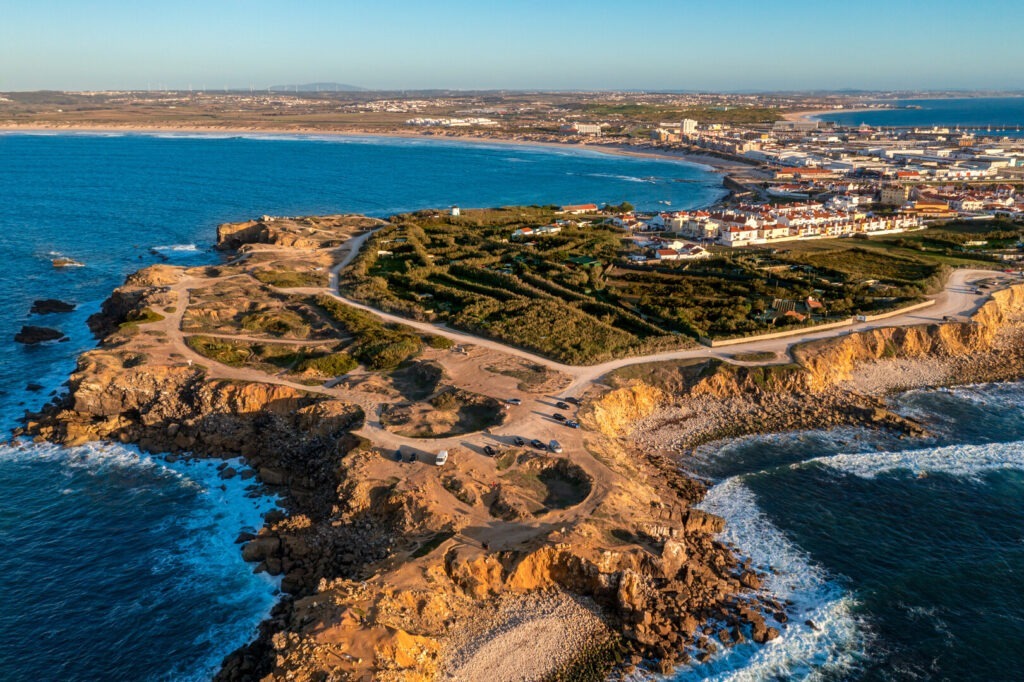
Peniche is built on a rocky peninsula that juts out into the Atlantic, surrounded by ocean on three sides. It’s a small town with less than 30,000 inhabitants, compact and easy to navigate.
Peniche has been a fishing town for centuries, and it still is. The port is one of the most active on the Portuguese coast. For surfers and ocean people, Peniche is hard to beat. It’s less slick and commercialised than Ericeira, but the surf community is well established. The Berlengas Islands, a UNESCO Biosphere Reserve about 10 kilometres offshore, are reachable by boat in under 30 minutes and worth at least a day trip.
There’s a growing digital nomad and remote-worker scene here, with co-working and co-living spaces starting to pop up around the town. The lifestyle is rugged and Atlantic-facing – this isn’t a polished, manicured version of coastal Portugal. That rawness is what draws people in.
Day-to-day living is straightforward. There’s a health centre, supermarkets, cafés, bars, and a reasonable selection of restaurants. Caldas da Rainha and Leiria are both within 30 minutes for anything you can’t find locally. Lisbon is around an hour and 15 minutes by car.
Property is still affordable, though prices have been climbing, particularly near Baleal. But compared to Ericeira – which has become increasingly expensive and saturated – Peniche still feels like it has room to breathe.
Best for: Digital nomads and remote workers seeking unpolished, affordable costal living.
8. Silves
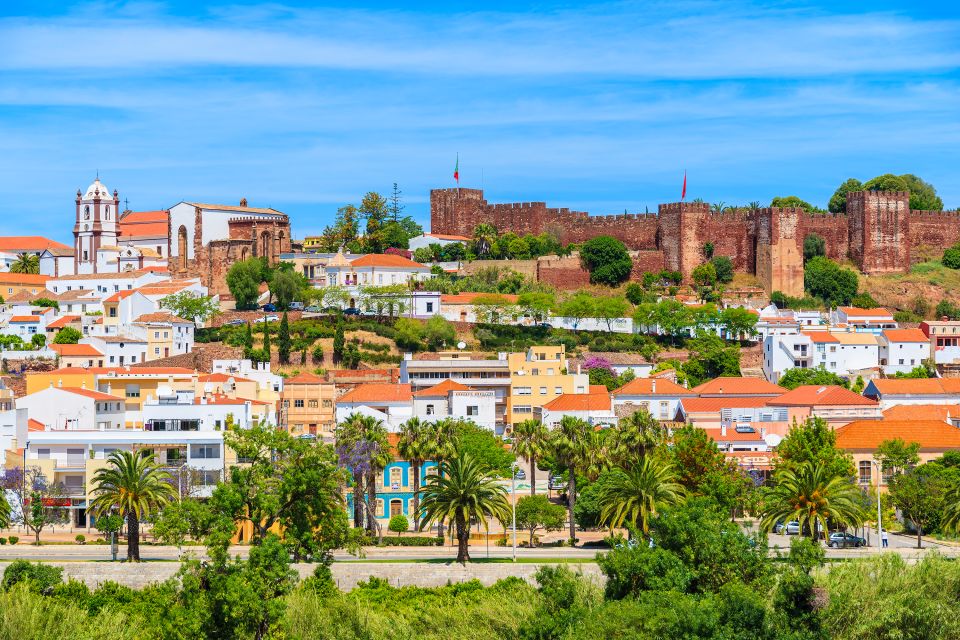
Most people’s image of the Algarve is beach resorts, golf courses, and all-inclusive hotels. Silves is none of those things.
It’s a small inland town of around 11,000 people, sitting above the Arade River, about 20 minutes north of the coast. It was once the capital of the entire Algarve region during the Moorish period (when it was known as Xelb), and at its peak it was one of the most important cities in the Iberian Peninsula. That’s hard to imagine now, walking through its quiet, narrow streets, but the scale of the red sandstone castle on the hilltop tells the story.
What makes Silves work as a place to live is the combination of proper Algarve climate with zero resort energy. You’re getting over 300 days of sunshine a year, mild winters, and hot summers, but without the tour buses, the English breakfasts, or the hen parties. It’s a real Portuguese town that happens to be in the Algarve.
The coast is close when you want it. Portimão and Armação de Pêra are both within a 20-minute drive. Lagos is about 30 minutes. But your daily life is inland, in a town where the pace is slow, and the cost of living is significantly lower than coastal towns.
Silves has a health centre, a small but serviceable commercial centre, and a weekly market. For bigger shops or the hospital, Portimão is the nearest option. It’s not the place for someone who wants everything on their doorstep, but for someone who wants the Algarve lifestyle without the Algarve clichés, Silves is a genuinely compelling option.
The town also hosts the annual Medieval Festival (Feira Medieval de Silves) every August, which takes over the entire historic centre for about 10 days. It’s one of the biggest themed festivals in the country, and it brings the town to life in a way that’s unlike anything else in the region.
Best for: Retirees after a slower pace of life, a great climate, and the coast close enough without living on top of it.